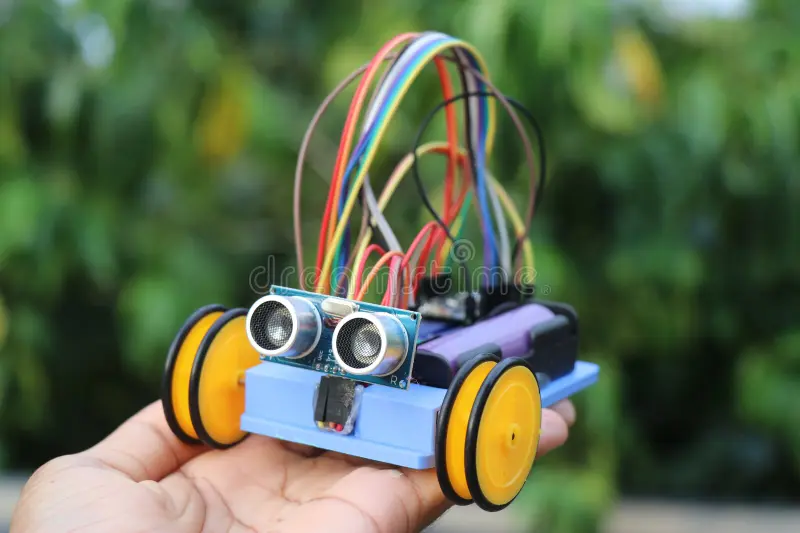
Autonomous Obstacle-Avoidance Robot
Built an autonomous three-wheeled robot using Arduino, ultrasonic sensing, and servo-based scanning for real-time obstacle avoidance. Implemented non-blocking control logic, PWM-based motor speed control, and directional decision-making to dynamically select safer paths. The robot can navigate complex environments, demonstrating practical applications of embedded systems and robotics.
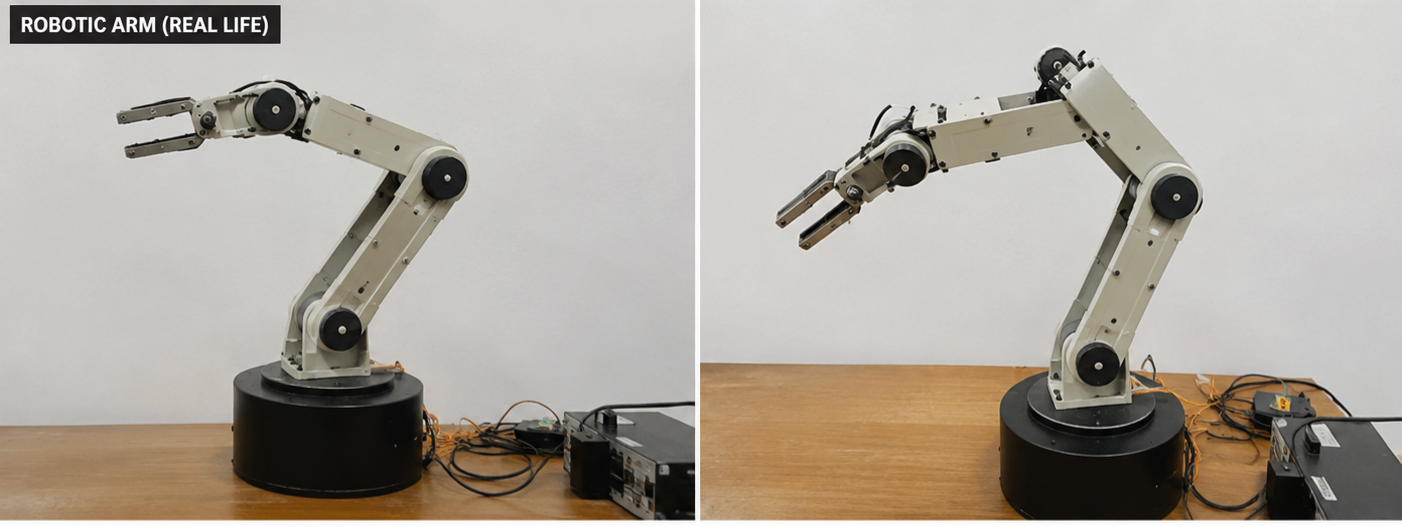
3-DOF Robotic Arm
Designed a 3-DOF robotic arm in AutoCAD, creating detailed orthographic and isometric views to demonstrate mechanical structure, joint movement, and workspace visualization. The model includes precise measurements, assembly relationships, and kinematic considerations for industrial robotics applications.
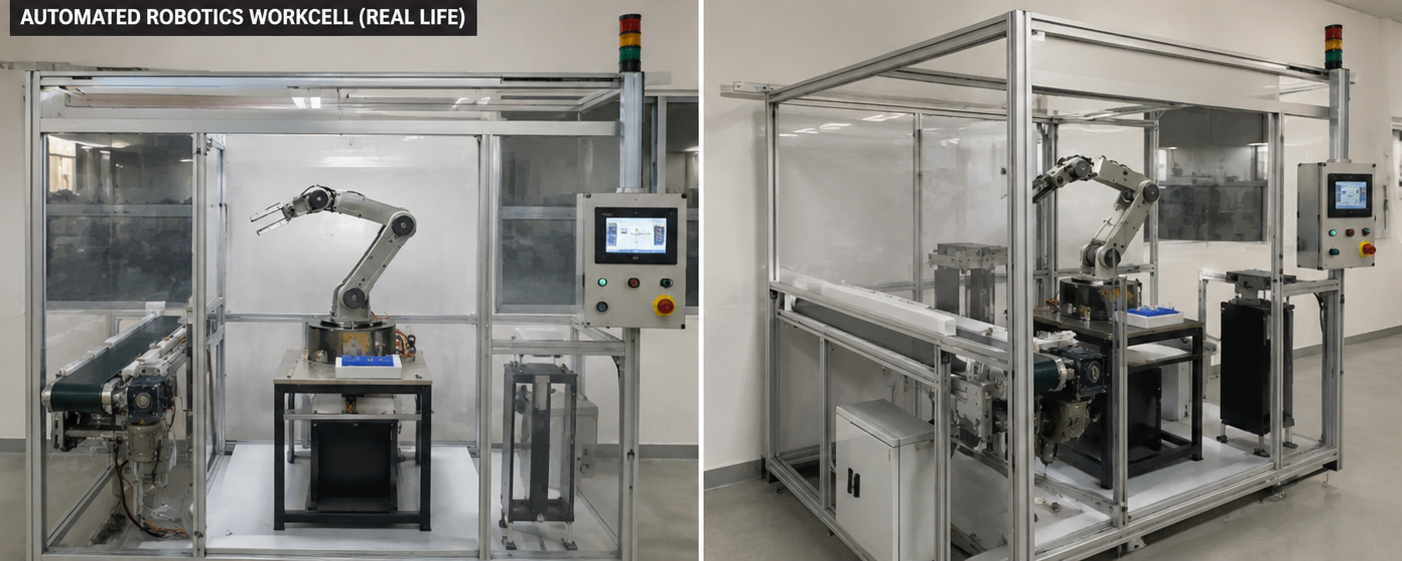
Automated Robotics Workcell
Developed a complete automated robotic workcell layout in AutoCAD, integrating a robotic manipulator, conveyor system, and workstation within a simulated industrial automation environment. The design includes spatial planning, safety zones, and equipment integration for a fully functional industrial assembly cell.

Smart Health Monitoring System
The Smart Health Monitoring System continuously monitors vital signs such as heart rate, temperature, and oxygen levels using sensors connected to microcontrollers.It sends real-time health data to a dashboard/cloud platform for remote monitoring and emergency alerts.The project aims to provide an affordable, scalable, and efficient healthcare solution using IoT and embedded systems.